Choosing the right Oshkosh neighborhood can shape your daily routine as much as the home itself. If you are balancing school planning, commute times, parks, downtown access, or the ability to get around without always relying on your car, it helps to compare neighborhoods by lifestyle instead of just by map boundaries. This guide breaks down several of Oshkosh’s key neighborhood clusters so you can narrow your search with more confidence. Let’s dive in.
How Oshkosh Neighborhoods Work
In Oshkosh, neighborhoods are geographically defined areas, and neighborhood association membership is voluntary rather than HOA-style. The city supports recognized associations through ONE Oshkosh and GO-HNI, and the city recommends using its interactive neighborhood map to look up a specific street address.
That matters because buyers often shop by feel first, then confirm the exact location. In Oshkosh, the most useful way to compare areas is by how close they are to downtown and UW-Oshkosh, how easily they connect to I-41 and major roads, and how much of everyday life can be handled on foot, by bus, or by car.
What Families Should Verify First
If schools are part of your home search, it is smart to verify assignment details at the exact address level. The Oshkosh Area School District serves more than 9,000 students and assigns schools by home-address boundary, not by broad neighborhood name, according to the district overview.
The district also notes that its school locator reflects current boundaries, but results are not guaranteed because capacity and transportation status can change. In addition, the district’s 2025 referendum updates include planned changes such as a new consolidated middle school at the Shapiro site, the consolidation of South Park and Perry Tipler, and expansions or renovations at several west-side elementary schools.
For you as a buyer, the takeaway is simple: use neighborhood comparisons to build a shortlist, then confirm school details directly for any home you are seriously considering.
Compare Oshkosh By Lifestyle
For most buyers, Oshkosh neighborhoods fall into four useful lifestyle groups:
- Downtown and UW-Oshkosh core for walkability and transit
- Established central historic neighborhoods for character and central access
- East-side neighborhoods for lakefront and park-oriented living
- West-edge neighborhoods for commute-first convenience
This approach can make your search easier because it connects location with day-to-day living.
Downtown And UW-Oshkosh Core
This cluster includes downtown Oshkosh and nearby central neighborhoods such as Historic Jackson, River East, and Lumber River. According to the city, downtown is bounded by Parkway Avenue, the Fox River, Division Street, and State and Jefferson streets, and nearby areas connect closely to the city core and UW-Oshkosh.
If you want the shortest trips to campus, downtown services, and riverfront amenities, this is one of the strongest areas to consider. The city’s Downtown Oshkosh neighborhood information and nearby central planning documents point to strong access to downtown and I-41 connections for adjacent central neighborhoods.
Why Buyers Choose This Area
This part of Oshkosh offers some of the city’s best walkability and transit coverage. It also gives you easier access to downtown destinations like the Riverwalk, cultural venues, and UW-Oshkosh.
GO Transit routes are especially helpful here, including Route 2 Main/Jackson and Route 3 New York/High. If you want more flexibility for commuting, errands, or campus access, that can be a real advantage.
What To Keep In Mind
The tradeoff is that a more central location often comes with a more urban street pattern. Depending on the block, you may notice more traffic activity and tighter parking than you would in outer neighborhoods.
If your priority is being close to everything, that tradeoff may be worth it. If you want a quieter, more car-oriented setting, another part of Oshkosh may fit better.
Central Historic Neighborhoods
Historic Fourth Ward, Historic Sixth Ward, and Sacred Heart are strong options if you want central access with established neighborhood character. The city describes Historic Fourth Ward and Sacred Heart as welcoming neighborhoods, while Historic Sixth Ward sits on the central grid near the Fox River and older street network.
These areas can appeal to buyers who want to stay close to downtown without being right in the retail core. You still get convenient access to central Oshkosh, but with a different neighborhood feel than the downtown and campus cluster.
Why Buyers Choose This Area
The biggest draw here is balance. You are close to the city core, but you may also find the kind of established layout and identity that some buyers want when comparing neighborhoods.
For many households, this category works well because it keeps commutes, errands, and downtown outings manageable. The city’s Historic Fourth Ward neighborhood page highlights that strong central location and neighborhood identity.
What To Keep In Mind
Because these are compact, central neighborhoods, the setting may feel less suburban than west-edge areas. Tighter lots, older street grids, and more street activity are common considerations when you compare them with outer parts of the city.
That does not make them better or worse. It simply means they fit buyers who value central access and neighborhood character over a more spread-out layout.
East-Side Lakefront Areas
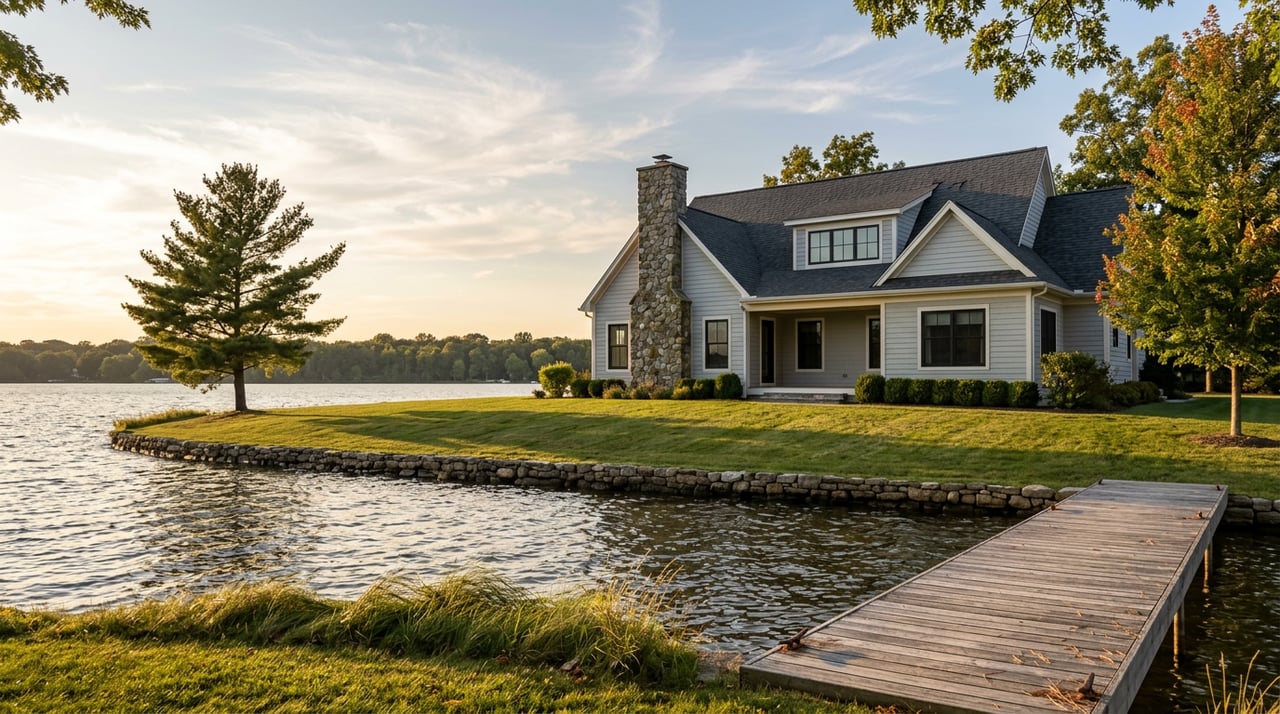
If parks, waterfront access, and outdoor recreation rank high on your list, look closely at Stevens Park and Menominee South. The city describes Stevens Park as a family-oriented area with access to Lake Winnebago, the Fox River, schools, parks, and historic architecture, while Menominee South emphasizes public spaces, historical buildings, and natural resources.
This side of Oshkosh stands out for its concentration of lakefront and park amenities. For buyers who want easy access to open space and recreation, it can be one of the city’s most appealing lifestyle choices.
Why Buyers Choose This Area
The east side gives you strong access to destinations like Menominee Park Zoo, Pollock Community Water Park, Lakeshore Park, and other public outdoor amenities managed through the city parks system. If weekends at the park, shoreline views, and recreation are part of your ideal routine, this cluster deserves a look.
This area can be especially appealing if you want a location that feels connected to Oshkosh’s waterfront identity. It is one of the clearest examples of choosing a neighborhood based on lifestyle, not just commute math.
What To Keep In Mind
The tradeoff is regional commuting. Compared with west-side neighborhoods, east-side areas may require more cross-town driving depending on where you work and which route you use to connect to the broader highway network.
If your top priority is outdoor access and park amenities, that may be a small compromise. If you need the fastest possible drive to I-41, the west side may be worth comparing side by side.
West-Edge Commuter Areas
Sawyer Creek and Fox Chase are two of the clearest examples of Oshkosh neighborhoods built around edge-of-city convenience. Both sit near the western city limits, and they align well with west-side arterials and transit route names that reflect major travel corridors.
For commuters, this cluster often makes sense because Oshkosh travel patterns are shaped heavily by access to I-41, US 41, WIS 21, WIS 44, WIS 76, and US 45, according to the city’s comprehensive plan.
Why Buyers Choose This Area
If you spend a lot of time driving to work or traveling around the Fox Valley, west-edge neighborhoods are often the most practical fit. They offer easier access to the interstate corridor and the west-side arterial network than more central or east-side areas.
GO Transit also serves west-side travel patterns through routes such as 5 Sawyer/Taft, 6 Witzel/9th, 7 Washburn/Koeller, 8 20th/South Park, and 9 Oakwood, all listed on the city’s routes and times page. WisDOT also maintains a park-and-ride lot near the US 41, WIS 44, and WIS 91 area, which can add flexibility for some commuters.
What To Keep In Mind
The tradeoff is that these neighborhoods are generally less walkable to downtown, the riverfront, and campus-area amenities. In everyday life, that often means more car dependence for errands, dining, events, and recreation in the city core.
If your schedule revolves around commuting efficiency, that may be exactly what you want. If your goal is to walk to more destinations, you will likely want to compare these areas carefully against central Oshkosh.
Transit And Everyday Convenience
Oshkosh has nine fixed GO Transit routes, and the city says most residents are within a few blocks of a bus route. That can be useful if you are trying to reduce driving, simplify a campus commute, or make one-car living more practical.
For daily convenience, location still matters most. Downtown-adjacent areas tend to work best if you want errands, events, riverfront spaces, and public institutions in one compact area, while east-side neighborhoods are strongest for park and waterfront access.
The city also highlights major amenities through its parks system, including the Riverwalk, Menominee Park Zoo, Pollock Community Water Park, Lakeshore Park, Leach Amphitheater, and more. Cultural resources such as the public library, public museum, and Grand Opera House further strengthen the pull of central Oshkosh for buyers who want activity close to home.
A Simple Way To Narrow Your Search
If you are just starting your search, this quick framework can help:
- Choose the downtown and UW-Oshkosh core if walkability, transit, and proximity to campus or downtown matter most.
- Choose central historic neighborhoods if you want established character and easy access to the city core.
- Choose Stevens Park or Menominee South if lakefront recreation, parks, and public outdoor spaces are high priorities.
- Choose Sawyer Creek or Fox Chase if your routine is built around driving, highway access, and west-side convenience.
The right fit depends on how you want your week to feel, not just where a pin lands on the map.
How To Tour Neighborhoods More Effectively
Once you have a shortlist, try visiting each area at different times of day. Drive your likely commute, check how long it takes to reach the places you use most, and confirm what is actually nearby for parks, transit, and daily errands.
It is also worth checking exact address details through the city neighborhood map and confirming any school questions directly through the district locator. A good neighborhood match usually comes from combining the facts with how the area feels in your real routine.
If you are weighing Oshkosh neighborhoods and want local guidance that is clear, practical, and personal, Better Homes and Gardens Real Estate Special Properties is here to help you compare locations, narrow your options, and move forward with confidence.
FAQs
Which Oshkosh neighborhoods are best for commuting?
- For commute-first buyers, west-edge areas like Sawyer Creek and Fox Chase often stand out because they offer easier access to I-41 and the west-side arterial network.
Which Oshkosh neighborhoods are best for walkability?
- Downtown Oshkosh and nearby UW-Oshkosh core neighborhoods usually offer the strongest walkability, plus some of the city’s best transit coverage and access to riverfront amenities.
Which Oshkosh neighborhoods have the best access to parks and waterfront recreation?
- East-side areas such as Stevens Park and Menominee South are strong options if you want close access to Lake Winnebago, the Fox River, parks, and public recreation amenities.
How do school assignments work in Oshkosh neighborhoods?
- School assignments are based on home-address boundaries through the Oshkosh Area School District, so you should verify each property through the district’s school locator rather than assume a neighborhood always matches one school path.
Are Oshkosh neighborhoods part of homeowners associations?
- Oshkosh neighborhoods are geographically defined, and neighborhood association membership is voluntary rather than HOA-style, according to the city.
How can I look up an Oshkosh neighborhood by address?
- You can use the City of Oshkosh interactive neighborhood map to check which recognized neighborhood includes a specific street address.