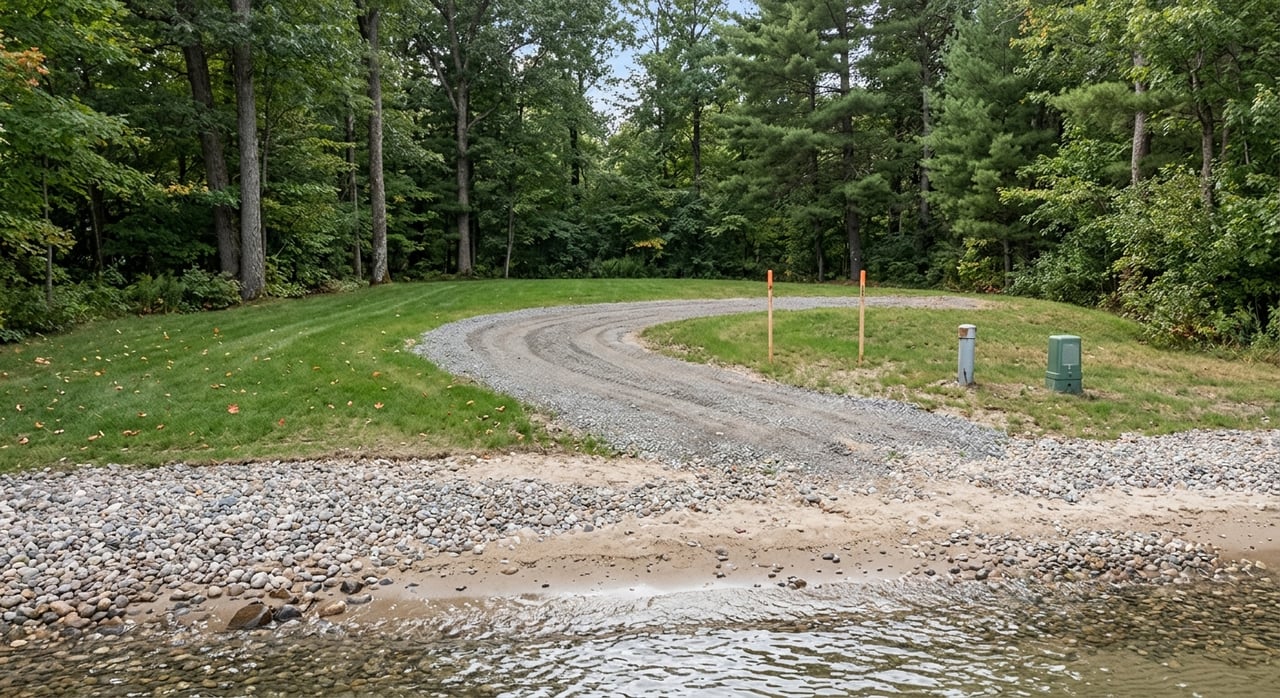
If you are thinking about owning a place on Fox Lake, one question can shape your whole budget and timeline: should you buy an existing waterfront home, tear one down, or build from the ground up on a lot? That choice sounds simple until you factor in shoreline rules, wetlands, access rights, utility service, and whether a parcel is truly buildable. This guide will help you sort through the key differences, the local constraints that matter most in Fox Lake, and the questions to answer before you commit. Let’s dive in.
Start With Property Type
Not every Fox Lake lot gives you the same rights or the same building options. In this market, the difference between true frontage, deeded access, and common-access ownership can change both your lifestyle and your long-term costs.
Current listing data shows a range of Fox Lake land opportunities, from smaller near-lake or deeded-access lots around $20,000 to larger tracts reaching $950,000, with other active examples at $49,900 and $174,000. At the same time, current waterfront home listings are roughly $431,999 to $459,000, based on the latest Fox Lake market snapshot.
Before you compare lot prices to house prices, confirm what you are actually buying. One current Fox Lake listing, for example, is a condo lot with deeded lake access rather than full frontage, which is why it is smart to verify dock, pier, and association rights in writing before assuming a parcel functions like a private waterfront property, as highlighted in this Fox Lake condo lot example.
Frontage vs deeded access
A true waterfront lot typically includes direct shoreline frontage. That can offer more control over how you use the property, but it also brings the most shoreline-related review.
A deeded-access or common-access property may still give you meaningful lake use, but the rights can be narrower. You may need to confirm whether you can place a dock, use an existing pier, store equipment, or rely on association rules that could limit how the access works.
Why this matters for value
Two properties can both be marketed as “lake access” and still deliver very different experiences. If your goal is to build a custom waterfront retreat, frontage often matters more than the lot size alone.
If your goal is flexibility and a lower entry point, deeded-access or off-water properties near public launch options may still fit. Fox Lake has public access points at Clausen Park and Town Park, and the city also operates a public launch at Clausen Park with a $5 daily fee per craft, season passes, and a no-power-loading rule, according to the Wisconsin DNR survey of Fox Lake.
Know Fox Lake’s Shoreline Conditions
Fox Lake is a 2,713-acre drainage lake with a maximum depth of 19 feet. The DNR lake survey notes that residential development is concentrated along the southwest, west, and north shorelines, while much of the remaining shoreline is bordered by wetlands.
That matters because shoreline character directly affects what can be built and where. The same survey notes a muck bottom and documented aquatic invasive species including zebra mussels, Eurasian watermilfoil, and curly-leaf pondweed, all of which make careful shoreline review even more important.
For buyers, the takeaway is simple: a lot that looks attractive on a map may still have meaningful development limits on the ground. Wetland fringe, shallow shoreline conditions, and regulated shoreland areas can all shrink the actual building envelope.
Confirm Which Rules Apply
One of the biggest local details in Fox Lake is that parcel review can split between city and county systems. Your first step should be confirming whether the property is inside the City of Fox Lake or in an unincorporated area.
For unincorporated parcels, Dodge County shoreland rules generally apply. The county’s planning materials track factors such as zoning, wetlands, floodplains, electric utilities, gas service, and public sewer and water facilities, which you can review through Dodge County planning resources.
For city parcels, municipal rules and state law apply, and the City of Fox Lake provides building inspection services. This city-versus-county split is one reason local guidance can save you time and help you avoid costly assumptions.
Understand Buildability Limits
A waterfront lot is only as useful as its actual buildable area. On Fox Lake, setback, lot size, width, buffer, and impervious-surface limits can all affect whether your plans work.
Shoreland setbacks
Under Dodge County shoreland standards, buildings and structures generally need a 75-foot setback from the ordinary high-water mark. There is also a 35-foot vegetative buffer zone where clearing is restricted, and in some established development patterns, setback averaging may reduce the principal structure setback, but not below 35 feet from the ordinary high-water mark, based on the Dodge County shoreland ordinance.
This means a narrow lot can become much harder to use than the listing photos suggest. If the building area sits too close to the shoreline or overlaps a regulated area, your design options may shrink fast.
Lot size and width
Lot dimensions are just as important as price. In Dodge County’s shoreland ordinance, lots served by public sewer generally need at least 10,000 square feet and 65 feet of width at the building setback line and ordinary high-water mark, while unsewered lots generally need 20,000 square feet and 100 feet of width.
That can be a major issue for older waterfront parcels. A lot may appear usable because there is an older cabin on it, but a new build or major rebuild may face today’s standards rather than yesterday’s layout.
Impervious surface limits
Driveways, patios, roofs, garages, and hardscaping all count toward site coverage. The county standard is 15% impervious surface within the shoreland area, though some properties may go up to 30% with mitigation, and highly developed shorelines may allow higher thresholds in certain cases under the ordinance.
If you want a larger home, detached garage, wider driveway, or more outdoor living space, these limits should be reviewed early. Site planning is not just about where the house fits, but how the full property layout fits.
Compare Building vs Buying Existing
For some buyers, building is the best way to get the exact layout and finishes they want. For others, buying an existing waterfront home can reduce uncertainty and speed up the path to lake living.
Here is a simple way to compare the two paths:
| Option | Potential Upside | Key Risk to Review |
|---|---|---|
| Buy an existing waterfront home | Faster move-in and easier to evaluate current use | Existing condition, nonconforming features, renovation limits |
| Buy a teardown site | Better location with a chance to reimagine the property | Setback, rebuild limits, utilities, mitigation, and permit costs |
| Build on vacant land | Most design freedom if the lot is truly buildable | Wetlands, lot dimensions, sewer or septic feasibility, access rights |
In Fox Lake, the right answer often depends on the parcel more than the purchase category. A modest existing home on a legally conforming site may offer more flexibility than a vacant lot with hidden constraints.
Review Teardown and Remodel Rules Carefully
If you are considering an older waterfront home, do not assume teardown is the best option. In some cases, keeping and improving an existing structure may make more sense than starting over.
Dodge County allows maintenance, repair, replacement, restoration, rebuilding, or remodeling of some lawfully placed nonconforming structures without expanding the footprint. The ordinance also provides limited paths for lateral expansion or relocation if the structure is at least 35 feet from the ordinary high-water mark and other conditions are met, according to the county shoreland ordinance.
That is why older homes in the setback deserve a side-by-side analysis. A property that seems like a perfect teardown may actually lose advantages that the existing structure already has.
Check Sewer, Water, and Septic Early
Utility service can be one of the biggest cost differences between lots. If a parcel is inside the City of Fox Lake, you may have a stronger chance of municipal utility access.
The city says its public water and sewer system serves about 1,500 residents through 750 connections, with wastewater conveyed to a lagoon system jointly owned by the city and the Inland Lakes Sewer District, according to the city’s Utilities Department information. That can make some city lots or teardown sites more straightforward from an infrastructure standpoint.
Outside the city, assume a parcel is a well-and-septic candidate until proven otherwise. For unsewered lots, septic feasibility can be a deal breaker, and Dodge County oversees private onsite wastewater systems under SPS 383 through its septic system program.
Do Not Skip Floodplain and Access Checks
A parcel can have shoreline appeal and still present practical access problems. Driveway location, legal access, and easements should all be verified before you remove contingencies.
Dodge County notes that address assignments are based on where the driveway meets the road, and site plans and surveys can help during that process, as outlined on the county’s permits and ordinances page. That is a useful reminder that access is not just a map issue. It is a site-planning issue.
Floodplain review also matters. The county directs buyers to review floodplain and shoreland ordinances and permit worksheets, and shoreland structures must comply with applicable floodplain zoning requirements under county rules.
Questions to Ask Before You Buy
If you are comparing Fox Lake lots or older waterfront homes, these are the questions most likely to affect value and buildability:
- Is this a legal buildable lot or simply access land?
- Does the property include true frontage, deeded access, or common-access rights?
- What part of the parcel lies inside the shoreland setback or floodplain?
- Is public sewer available, or will the property require septic?
- Do the lot size and width meet current standards?
- How much impervious surface is already used or proposed?
- Can an existing home be improved, expanded, or rebuilt under current rules?
- Where is the legal driveway access point?
- Are there wetlands or shoreline conditions that reduce the building envelope?
These are the kinds of details that can turn a promising listing into a smart purchase, or a costly surprise.
Why Local Guidance Matters
Fox Lake offers real opportunity for buyers who want waterfront living, lake access, or land for a custom plan. But the path gets clearer when you look beyond the listing price and focus on jurisdiction, access type, site constraints, and utility service.
That is where working with a local team can make a real difference. Better Homes and Gardens Real Estate Special Properties brings a community-rooted, team-based approach to waterfront, land, and lifestyle properties across the region, helping you evaluate the details that matter before you buy or build.
FAQs
What is the difference between a Fox Lake waterfront lot and a deeded-access lot?
- A waterfront lot typically includes direct shoreline frontage, while a deeded-access lot gives you lake-use rights without full private frontage. You should confirm dock, pier, and association rights in writing.
What setback rules matter for building on Fox Lake lots?
- In unincorporated Dodge County shoreland areas, buildings generally need a 75-foot setback from the ordinary high-water mark, with some limited averaging provisions that still do not reduce the setback below 35 feet.
What lot size is needed to build on a Fox Lake waterfront parcel?
- Under Dodge County shoreland rules, sewered lots generally need at least 10,000 square feet and 65 feet of width, while unsewered lots generally need 20,000 square feet and 100 feet of width.
Are city utilities available for Fox Lake lots?
- Some parcels in the City of Fox Lake may have access to municipal water and sewer, while outlying parcels should be treated as well-and-septic candidates until utility availability is confirmed.
Should you tear down or remodel an older Fox Lake waterfront home?
- It depends on the site and the existing structure. Some lawfully placed nonconforming homes may be maintained, rebuilt, or remodeled under county rules, so it is worth comparing improvement options against a full teardown plan.
What should you verify before buying a Fox Lake lot to build on?
- You should confirm the governing jurisdiction, access type, buildable area, floodplain or wetland impacts, utility or septic feasibility, lot dimensions, and permit requirements before moving forward.